How to Sell Surplus Industrial Equipment for the Best Possible Return
- News
Every plant, warehouse, and maintenance shop ends up with equipment it no longer needs. A project gets cancelled, a line is upgraded, or a bulk order arrives twice, and suddenly there are pallets of unused, excess, or outdated gear taking up floor space. Holding that inventory costs money in storage, insurance, and tied-up capital. That is why many businesses choose to sell surplus industrial equipment instead of letting it gather dust. Done well, it frees up room, recovers cash, and puts working parts back into the hands of people who need them. This guide walks you through how to do it properly.
What Types of Industrial Equipment Can You Sell?
Most facilities are surprised by how much of what they own still has resale value. If you want to sell used industrial equipment, these are the main categories buyers look for:
- Automation equipment: drives, HMIs, sensors, and robotic components
- PLCs: programmable logic controllers and their I/O modules
- Motors and pumps: electric motors, gear motors, and process or hydraulic pumps
- Valves: ball, gate, solenoid, and control valves
- Electrical equipment: breakers, contactors, relays, transformers, and disconnects
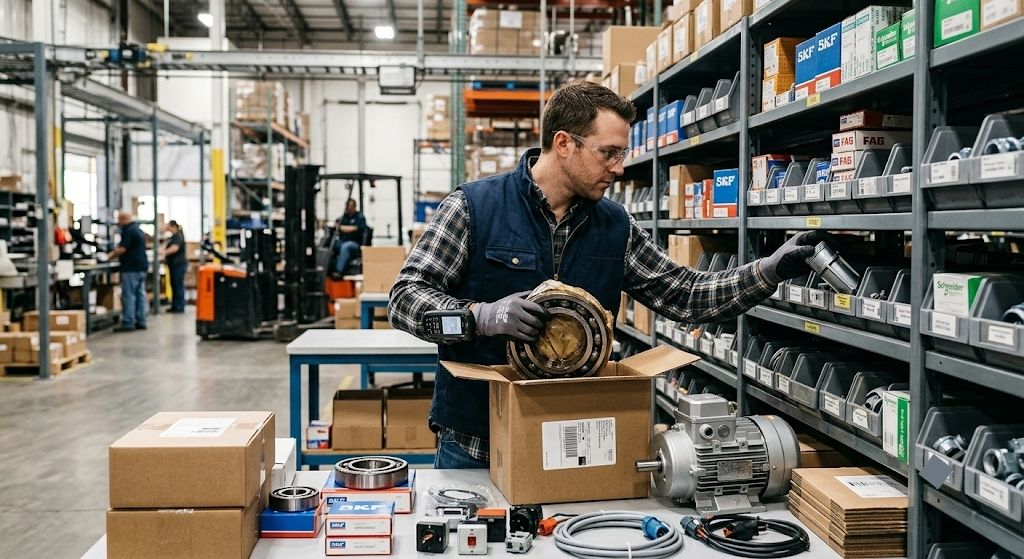
- MRO parts: bearings, seals, filters, fittings, and other maintenance spares
Even items that have sat in a storeroom for years can attract industrial equipment buyers, as long as the brand is recognized and the part is still in demand.
How to Prepare Your Equipment for Sale
A bit of groundwork makes it much easier to sell surplus industrial equipment at a price you're happy with. Buyers respond faster when the details are clear.
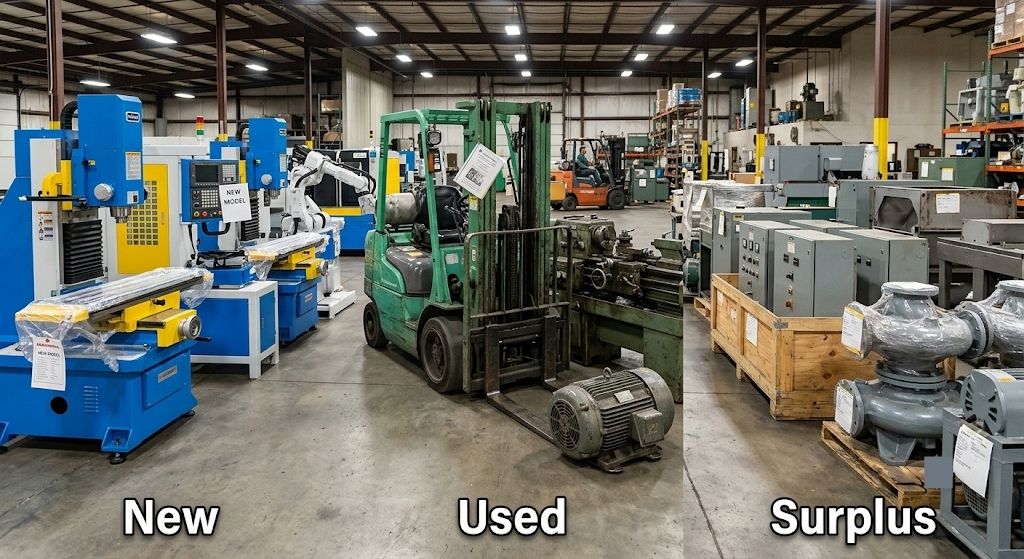
Check the condition: Determine if the item is new in the box, new surplus, used, or refurbished. Be very transparent about scratches or damage, etc., in order to avoid possible disappointment later on which would either reduce the offer or terminate the deal.
Collect part and model numbers: Copy the full manufacturer part number, model number, and serial number from the nameplate. A single wrong digit can mean an entirely different product.
Note quantities: Count what you have and write it down. Larger lots often appeal more to used industrial equipment buyers than single pieces do, and a firm count keeps any quote accurate.
Take clear photos: Shoot each item from a few angles and include a close-up of the label. Good lighting and a plain background go a long way.
Once you have a simple spreadsheet with all of this, you're ready to sell surplus equipment without a drawn-out back-and-forth.
What Affects the Value of Surplus Equipment?
Knowing the factors that influence the price can help you have an accurate idea of what to sell before you sell surplus industrial equipment. Here are the main factors:
- Brand: The famous brands usually keep their price stable compared to the less known or obscure ones.
- Condition: Unused parts in original packaging usually bring the strongest offers.
- Demand: If plants across the country still run a particular model, buyers will compete for it.
- Quantity: Several matching units can raise the total value, although very large lots are sometimes discounted per unit.
- Availability of specifications: Technical sheets, instructions, and inspection records all allow buyers to feel secure about what they buy.
Products that are no longer available can also change in either direction. Certain products may be the only supply on the market which could make them precious and therefore more expensive. Others will fall short due to being unsupported. It also depends on the moment; thus, do not leave your stocks lying around for years while the replacement gets further outdated.
Where Can You Sell Surplus Industrial Equipment?
There is no single best channel. Each one comes with trade-offs.
Direct industrial buyers: Companies which buy equipment for their own operation or for resale can often provide direct quotes. If you go directly to the industrial equipment buyer you will not have the middleman and therefore make the process quite simple.
Marketplaces: Online marketplaces reach a wide audience, but you handle the listings, questions, shipping, and low-ball offers yourself.
Auctions: An auction can move a large lot in a hurry, though the final price depends on who shows up that day, and fees come out of your proceeds.
Specialized surplus buyers: Specialists who understand automation and electrical parts can identify items quickly and pay fairly. Surplus industrial equipment buyers who focus on this niche generally know what a part is worth. If you plan to sell industrial equipment in bulk, a specialist can save you a lot of time.
How VB Industrial Supply Can Help
VB Industrial Supply buys surplus industrial equipment and parts, including automation components, PLCs, motors, valves, electrical products, and MRO stock. Working with the team at VB Industrial Supply means dealing with surplus industrial equipment buyers who handle this kind of inventory every day.
The quote process is straightforward:
- Visit the Sell Us Your Parts page.
- Submit your part numbers, quantities, condition details, and photos.
- The team reviews your list and checks current demand.
- You receive a quote and decide whether to accept it.
- Once you agree, shipping and payment are arranged.
- You don't need a perfect inventory list to get started. Send what you have and the team can help fill in the gaps.
Conclusion
Getting a strong return comes down to preparation. Check the condition of each item, gather accurate parts and model numbers, count your quantities, and take clear photos. Then choose the sales channel that fits the size and type of your inventory. If you're ready to sell surplus industrial equipment, or simply want to sell industrial equipment that has been sitting idle, requesting a quote is a low-effort first step. Send your list to VB Industrial Supply and find out what your unused inventory is worth.
FAQ's
1. What is the fastest way to sell surplus equipment?
It is necessary for you to come prepared with your parts number, quantities and photos then email them to a buyer that specializes in your equipment. This will lead to the buyer providing you with quick quotations.
2. Can I sell just a few items, or only full lots?
The two methods can be applied but generally, it's the size of the lots that influences the level of interest of the buyers.
3. Does the equipment need to be in working condition?
No, it is not necessary. The machines that are functioning, the ones that have never been tested and the stock pieces, all can be valuable just make sure to inform the buyer truthfully about the condition.
4. Do I need the original packaging?
They need to be retained, of course, even if it is an old part, original containers are appreciated more by the used machines buyers.
5. Is it worth it to sell used industrial equipment that is several years old?
It is possible most of the time. It will depend on if the brand is still in circulation and the product is in reasonably good condition, so that an older product is also capable of fetching a pretty good price.