How to Build a Surplus Inventory List Buyers Can Quote Fast
- News
When a manufacturer or distributor decides to sell excess inventory, the first thing a buyer asks for is a list. A clear list gets you a fast, accurate offer. A messy one gets you follow-up questions, a long wait, or a low number that assumes the worst about everything on it.
This guide covers how to put together a surplus inventory list that buyers can price quickly: which columns to include, how to describe condition, and the common mistakes that slow a quote down.
Why the list matters more than the photos
For most industrial surplus, value comes from the exact part number, the quantity and the condition. A buyer prices a lot by looking up each part number and checking what that item sells for in that condition. Photos help confirm condition and packaging, but they can't replace a list. A spreadsheet with one row per part number lets a buyer work through hundreds of lines in the time it would take to identify a few parts from pictures.
The columns every list needs
You don't need a special template. A simple spreadsheet with these columns covers almost everything a buyer needs:
| Column | What to put in it | Example |
|---|---|---|
| Manufacturer | The brand on the label | Allen-Bradley |
| Part number | The full catalog number, including series or revision | 1756-L71 Ser. B |
| Description | A few words on what it is | ControlLogix processor |
| Quantity | Units on hand for that part number | 4 |
| Condition | New, open box, used or untested (see below) | New in original box |
| Notes | Anything unusual: damaged boxes, missing parts, sealed cases | 2 boxes have shelf wear |
If your ERP or inventory system can export to Excel or CSV, that export is usually a great starting point. Add a condition column if it doesn't have one, and you're most of the way there.
Condition: the column most lists leave out
Condition is the single most common gap in the lists we receive, and it has a big effect on value. The same part number can be worth very different amounts sealed in the box, opened, or pulled from a running machine. Without it, a buyer has to guess or come back with questions.
Plain categories work best:
- New in original box: never used, in the factory packaging. Note whether the seal is intact.
- New, no box or open box: never installed, but the packaging is opened, damaged or missing.
- Used, removed from working service: pulled from equipment that was running when it came out.
- Used, untested or unknown: you don't know its history. That's fine to say; it's better than guessing.
If a part number has units in more than one condition, give each condition its own row. Three new units and two used units of the same part are two lines, not one.
Getting part numbers right
A buyer looks up the part number exactly as you type it, so small errors matter:
- Use the manufacturer's catalog number, not your internal stock or bin number.
- Include the series, revision or suffix. Letters at the end of a part number often mean a different voltage, frame or firmware, and they can change what the part is worth.
- Watch for look-alike characters: zero and the letter O, one and the letter I, and missing dashes are the most common typos.
- Don't drop leading zeros. Spreadsheets sometimes strip them from number-only part numbers. Format that column as text before you paste.
Quantities and lots
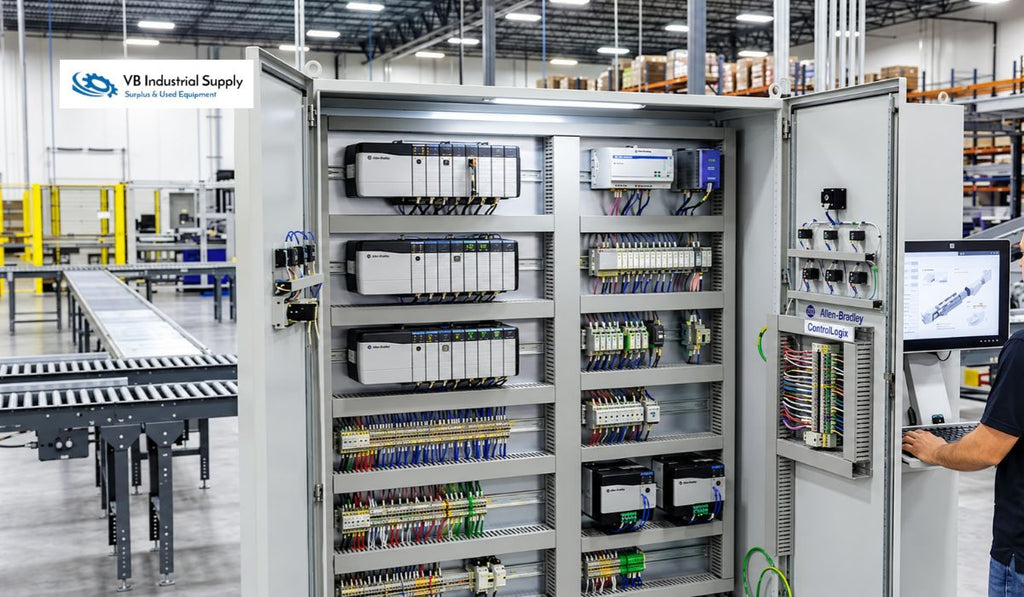
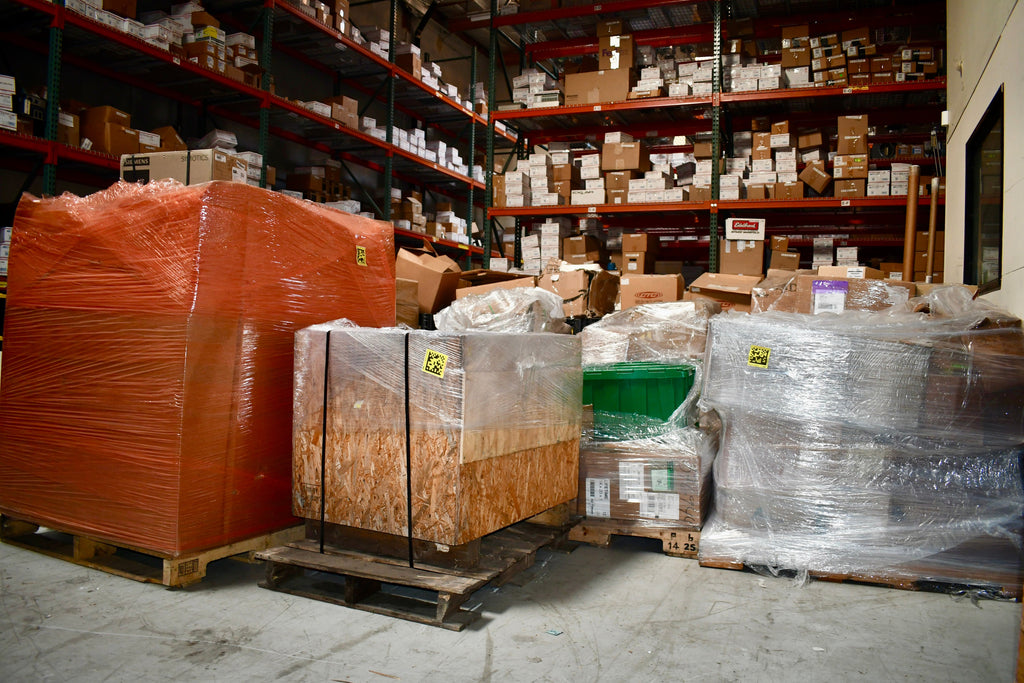
Count by part number, and keep one row per part number and condition. If items are in sealed multi-packs or case quantities, say so in the notes ("box of 10") so the buyer knows how they'll arrive. If you're selling a whole storeroom or a closed line, it's still worth listing what you can. A partial list with the highest-value items gives a buyer something real to price, and they can estimate the rest from photos of the shelves.
Not sure what your stock is worth before you send it? Our excess inventory value checklist walks through what drives value, and the excess and obsolete inventory guide covers your options in more detail.
Mistakes that slow down a quote
- Sending only photos with no part numbers
- Leaving condition blank or writing "mixed" for the whole list
- Merged cells, subtotals or blank rows in the middle of the data
- Prices or "cost" in place of the part number column
- Several items crammed into one row
- Internal SKUs with no manufacturer part number
Frequently asked questions
Do I need photos?
Photos help, especially for used items or damaged packaging, but a good list matters more. A few pictures of the shelves and labels are usually enough.
Can I send a raw ERP export?
Yes. If it includes manufacturer, part number and quantity, we can work with it. Add a condition column if you can.
What if I don't know the condition?
Say "untested" or "unknown." An honest unknown is easier to price than a guess that turns out wrong when the lot arrives.
What kinds of parts do you buy?
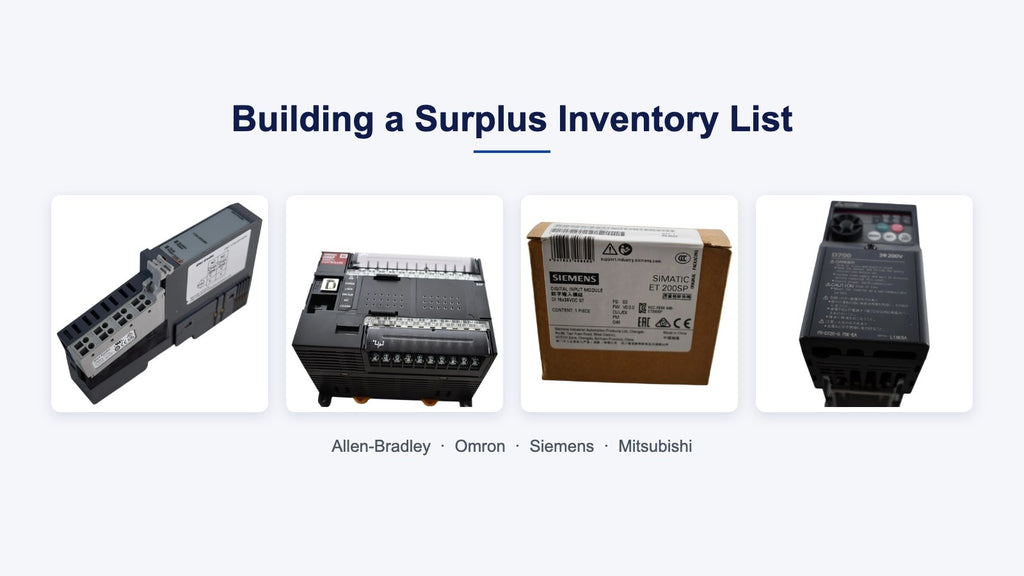
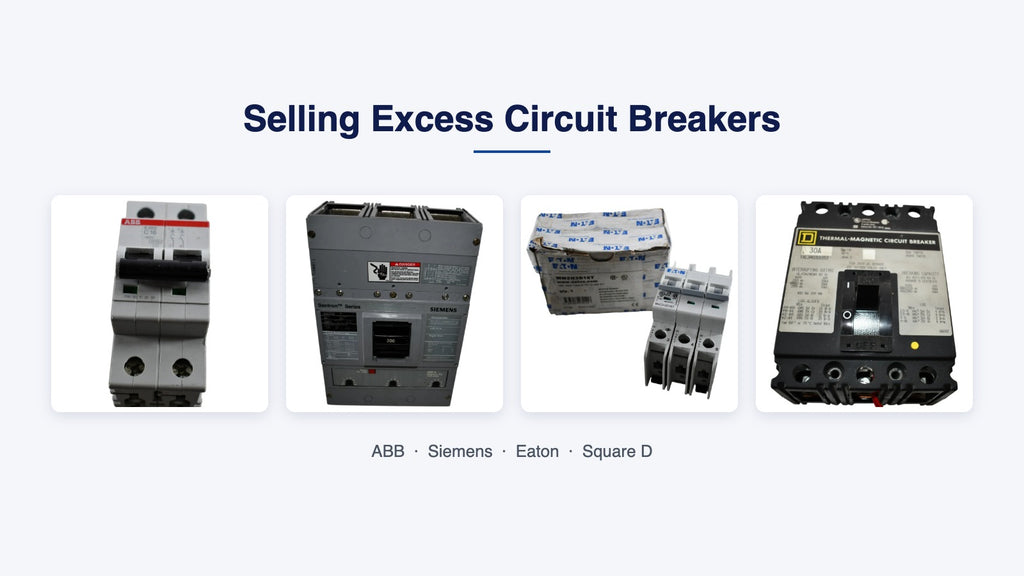
We buy surplus PLCs and automation parts, drives, circuit breakers, sensors, motors, pneumatics and MRO stock from US manufacturers and distributors. You can see the kinds of parts we stock in our PLC and circuit breaker collections.
Send us your list
Once your list is ready, send it to us and get one offer for the whole lot, usually within one business day. We cover freight and pay by same-day ACH once the lot arrives and is verified. You can also email info@vbindustrialsupply.com or call 805-620-0948, Monday to Friday, 8 AM to 5:30 PM Pacific.
Have surplus or excess inventory to sell?
Send us your list (part numbers, quantities and condition) and we'll get back to you with one offer for the whole lot, usually within one business day.
Get an offer or email info@vbindustrialsupply.com · 805-620-0948